
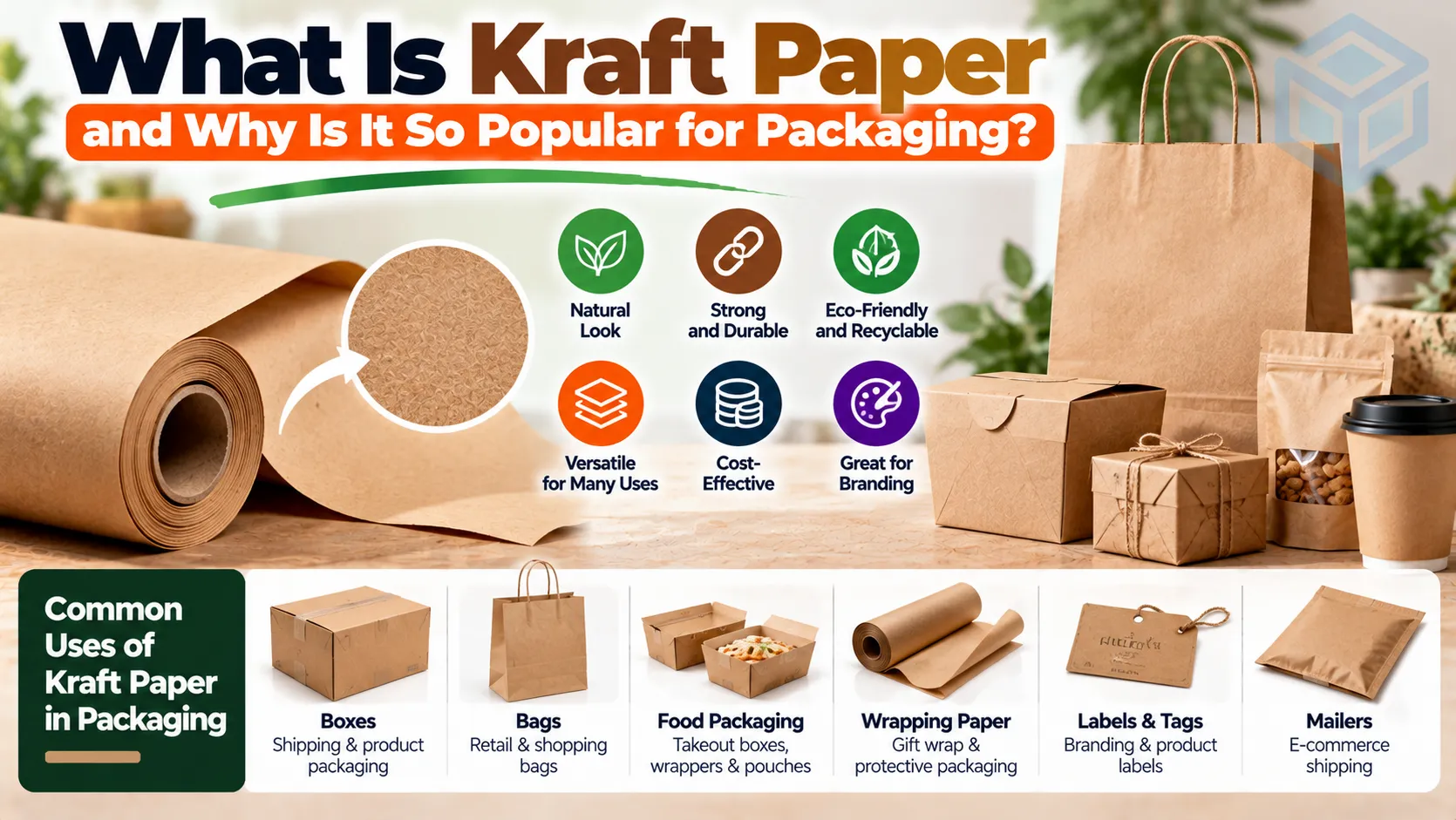
Kraft paper is a strong, usually brown paper made from wood pulp using the kraft (or sulfate) process. The process keeps the wood fibers long, making the paper tough and tear-resistant, and it’s typically left unbleached, giving kraft its natural brown color. It’s used for paper bags, wrapping paper, shipping sacks, corrugated boxes, mailers, labels and eco-friendly product packaging.
The name comes from the German and Swedish word “kraft”, which means strength. That says a lot about why packaging companies love it.
How kraft paper is made
- Wood chips, mostly from softwoods like pine, are cooked in a chemical solution under heat and pressure.
- The chemicals dissolve most of the lignin, the natural glue that binds wood fibers, while leaving the long cellulose fibers intact.
- The pulp is washed and screened. For brown kraft it’s left unbleached; for white kraft it’s bleached.
- The pulp is formed into sheets on a paper machine, pressed and dried.
Because the fibers stay long and the process removes most of the lignin, kraft paper is stronger than paper made with mechanical pulping. For more on how paper becomes packaging board, see what cardboard is made of.
Types of kraft paper
| Type | Color | Key feature | Common uses |
|---|---|---|---|
| Natural (unbleached) kraft | Brown | Strongest, most natural look | Bags, wrapping, boxes, sacks |
| White (bleached) kraft | White | Strong, brighter print surface | Food bags, retail bags, labels |
| Recycled kraft | Brown, slightly varied | Made from recovered fibers | Eco boxes, mailers, fillers |
| Kraft paperboard | Brown | Thick board for folding cartons | Soap, candle and retail boxes |
| Kraft liner (corrugated) | Brown | Outer layers of corrugated board | Shipping and mailer boxes |
| Kraft-look laminates | Brown paper outside | Paper face over a barrier film | Coffee and snack pouches |

Why kraft paper is so popular for packaging
It’s strong
Long fibers give kraft excellent tear and burst resistance. That’s why it’s used for heavy shopping bags, cement and flour sacks, and the outer liners of corrugated boxes.
It looks natural
The brown, slightly textured surface instantly signals natural, handmade, organic or eco-friendly. Many brands choose kraft for that reason alone.
It’s recyclable and biodegradable
Uncoated kraft paper can go in regular paper recycling and breaks down naturally. Recycled kraft also reuses fibers that would otherwise be wasted.
It’s cost-effective
Unbleached kraft skips the bleaching stage, and it’s produced at huge scale, so it’s usually an affordable choice.
Limitations to know about
- Printing looks more muted. Inks soak into brown paper and look darker, and white can’t be printed with standard CMYK. Bold, simple designs work best, and white ink or a white underlayer can help logos stand out.
- It isn’t grease or water proof on its own. For oily or moist foods, kraft needs a coating, a liner or a barrier film.
- Color varies slightly. Natural kraft can vary in shade between batches, which is part of its charm but worth knowing for brand consistency.
- Coatings affect recyclability. Plastic laminates and heavy coatings can make kraft harder to recycle.
Kraft vs white packaging
| Kraft | White (SBS) | |
|---|---|---|
| Look | Natural, earthy, rustic | Clean, bright, polished |
| Muted colors, bold designs work best | Sharp, vivid full color | |
| Strength | Very strong | Strong |
| Brand fit | Eco, organic, artisan, handmade | Beauty, tech, premium retail |
| Scuffs | Hides scuffs and marks well | Shows marks more |
If you’re comparing boards in more detail, our guide to paperboard grades covers SBS, FBB, CUK (coated kraft) and recycled board.
How brands use kraft packaging
- Kraft mailer boxes for e-commerce, often with a one-color logo
- Kraft soap and candle boxes for handmade and natural brands
- Kraft gift boxes with a sticker seal or twine
- Kraft paper bags for food, retail and takeaway
- Kraft stickers and labels for jars, bottles and coffee bags
- Kraft-look pouches for coffee, granola and snacks
Design tips for kraft packaging
- Use one or two strong colors. Black, white, dark green and deep red look great on kraft.
- Add white ink under colored areas if you need brighter colors.
- Let the brown show. Kraft looks best when the design leaves space for the paper itself.
- Pair it with a texture. Foil stamping, debossing and a twine wrap all suit kraft well.
- Use a matching kraft sticker as a seal for a finished look.
Kraft packaging from Apexio
We print custom kraft gift boxes, kraft mailer boxes, kraft soap boxes, kraft pillow boxes and kraft mylar bags, with FSC-certified kraft available. If you’re choosing a finish, see matte vs gloss. Every order comes with a free digital proof so you can see how your colors look on kraft.
Frequently asked questions
Kraft paper is made from wood pulp, mostly softwood, produced with the kraft process, which keeps the fibers long and strong.
Natural kraft paper is unbleached, so it keeps the brown color of the wood pulp. Bleached kraft is white.
Yes. Uncoated kraft paper is recyclable and biodegradable. Coated or laminated kraft can be harder to recycle.
No. Plain kraft paper absorbs water and grease. It needs a coating, liner or barrier film to resist moisture.
Kraft paper is a single sheet of strong paper. Cardboard is thicker board; corrugated cardboard often uses kraft paper as its outer liners.